Welcome to the new year. “Here’s what’s been happening—and what’s ahead—in our world of conservation.”
In this issue
- Talk on resurrection plants
- Paddavlei Project
- Hermanus Water
- Hope for Onrus River?
It’s a brand-new year!
Welcome to the first newsletter of the year. As we step into a new year together, we extend our sincere thanks to all our members for your continued support, commitment and engagement. The months ahead will bring both challenges and opportunities for our community, and staying informed, connected and constructive has never been more important. We look forward to sharing insights, local developments and meaningful conversations with you as the year unfolds.
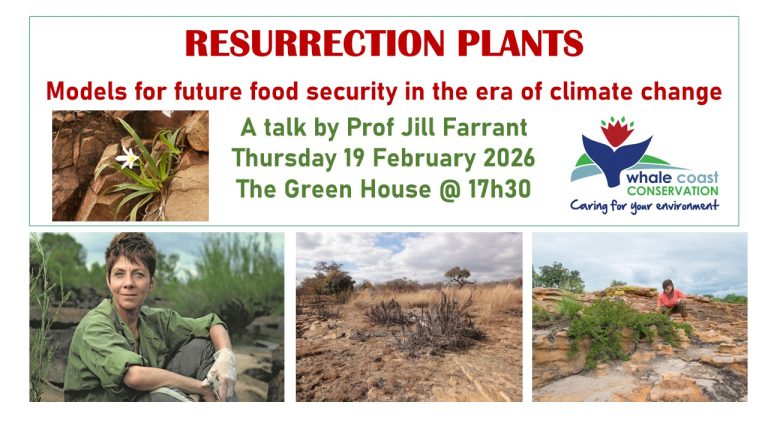
Talk by Prof Jill Farrant
Join us for an inspiring evening with Professor Jill Farrant, one of the world’s leading plant molecular physiologists and a pioneer in the science of resurrection plants — extraordinary species capable of surviving near-total desiccation and returning to life when waterarrives again.
Her groundbreaking research has positioned South Africa at the forefront of global efforts to develop drought-tolerant crops for a hotter, drier future.
Recently honoured with the 2025 NRF Lifetime Achievement Award, Prof Farrant is internationally recognised for her work on the genetic and physiological mechanisms behind desiccation tolerance in plants. Her research spans resurrection species, orphan crops, soil-regenerating bio-stimulants, and the development of drought-resistant maize and teff, offering promising pathways toward food security on a climate-stressed continent.
With more than 250 scientific publications, Prof Farrant bridges the world of cutting-edge research, conservation, agriculture, and biotechnology.
This talk will take you into the remarkable world of resurrection plants — how they dry, survive for months or years, and then spring back to life — and how unlocking their secrets may help secure the crops of the future. Discover how lessons from nature are being translated into climate-resilient agriculture, cosmeceuticals, and new opportunities for community livelihoods and the bioeconomy.
If you care about food security, climate resilience, African science or simply love the wonders of nature, this is a talk not to be missed.
Thursday 19 February 17h30 at the GreenHouse.
Paddavlei Project
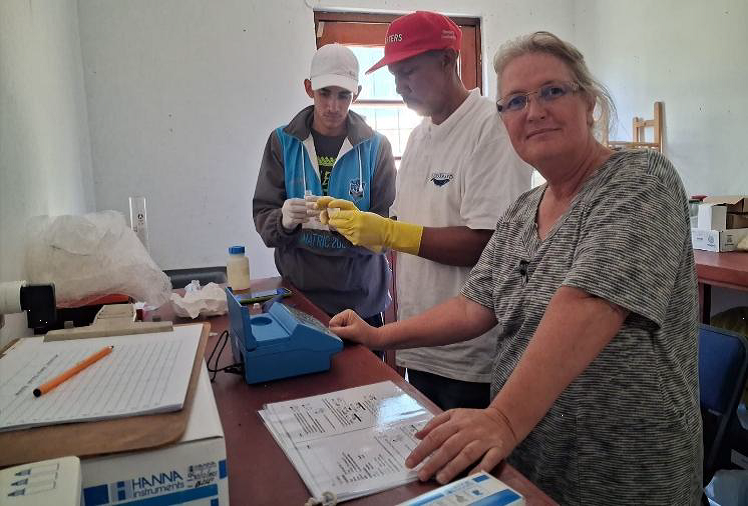
Sheraine van Wyk mentoring the youth testing the water quality in the Paddavlei to monitor the success (or not) of various interventions to reduce nutrients in the water.
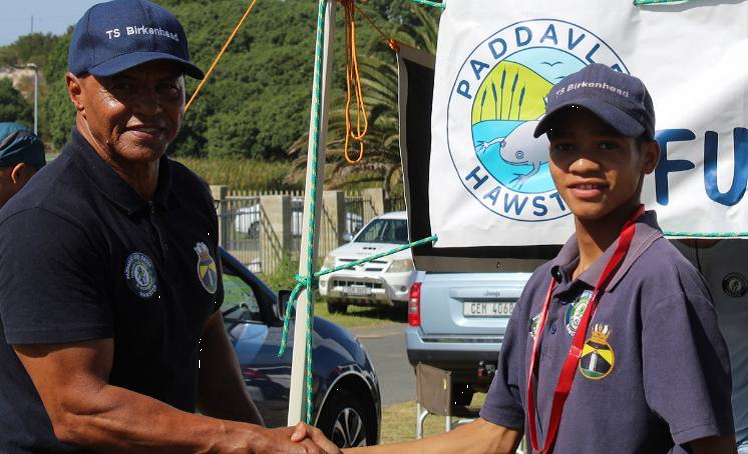
The Paddavlei project ended 2025 on a high note with a very successful fun run/walk.
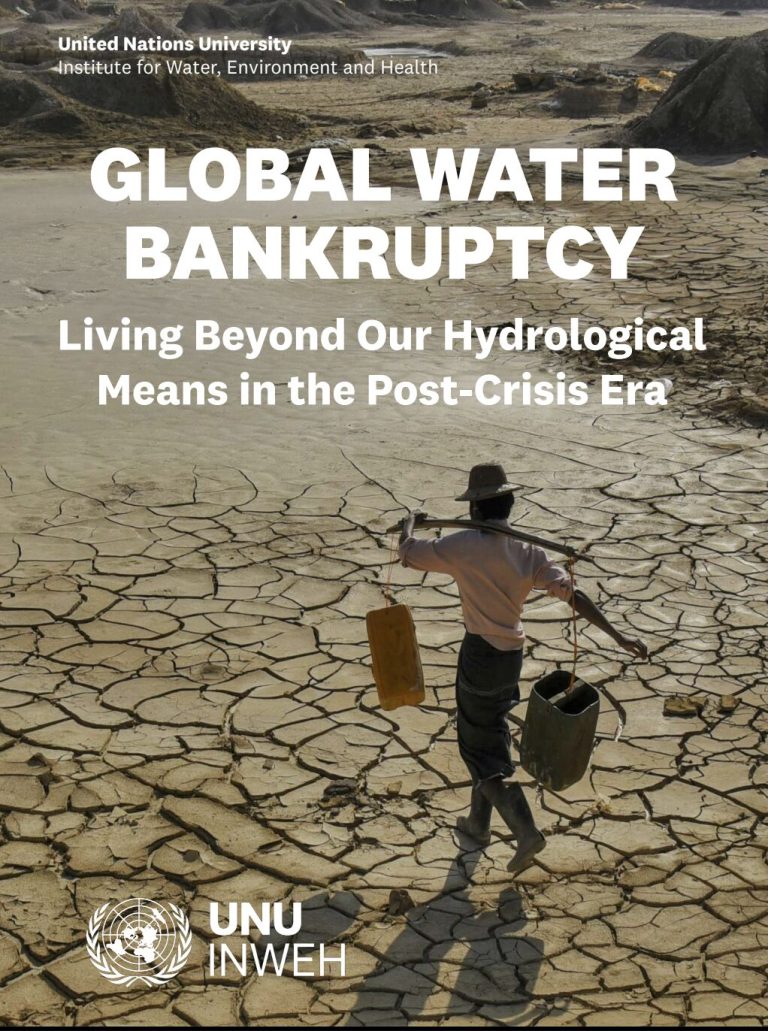
According to a recent UN report, the world is now in an era of “water bankruptcy”.
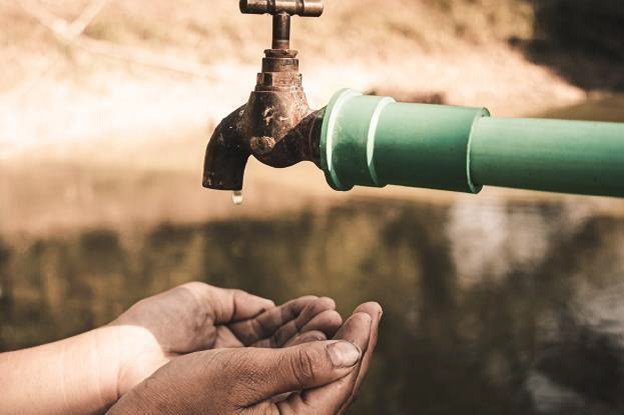
Hermanus is often seen as a town blessed by nature — mountains behind us, wetlands below and the sea at our feet. Water scarcity, many assume, is a problem experienced somewhere else. Not so. As elsewhere, Hermanus faces a hard and growing reality: our water supply is finite, and demand is rising faster than supply.
Rainfall in the Overstrand has always been variable. Dry years are nothing new. What has changed is consumption. Hermanus relies on surface water (rainfall) and groundwater (aquifers). These sources are limited by climate, geology and recharge rates. Aquifers, once overdrawn, take years to recover and can be permanently and irrecoverably damaged.
Public messaging focuses heavily on household water saving — shorter showers, greywater, rainwater tanks, fixing leaks. Many residents have been doing this for decades. Yet despite these efforts, overall use continues to increase.
Over recent years, the Overstrand has experienced a steady growth of both formal and informal settlements, seemingly without a realistic assessment of water availability. Once established, they must be serviced.
Critically, water use in informal settlements is generally unmetered, free at the point of use and unrestricted. There are no tariffs, no usage limits and no financial incentives to conserve. While formal households face higher costs and stricter restrictions, a growing share of the population draws from the same limited system without constraints.
Every additional household places a permanent demand on water supply. When thousands are added, total consumption rises sharply, regardless of how carefully residents conserve. Hermanus does not face water stress because residents fail to conserve. It faces water stress because of population growth.
This is not politics, it’s arithmetic. The impacts of a stressed water supply reach beyond household inconvenience. Agriculture becomes more vulnerable, food prices rise, tourism suffers, and rivers, wetlands and estuaries are deprived of flow, weakening ecosystems that naturally buffer floods and droughts.
Technology such as desalination and reuse can help to supplement supply, but is expensive, energy intensive and slow to scale. The Department of Water and Sanitation caps Hermanus’s combined surface and groundwater use at 6 million cubic metres a year. Right now, that is just enough to meet demand. But the Overstrand Municipality (OM) predicts that the town will continue growing by at least about 4%per year, which means usage will hit the limit by2030 and could rise to 14 million cubic metres by 2050.
The municipality’s long-term plan relies on desalination of seawater. The first steps must be taken as soon as 2026, with a second desalination plant needed by 2030 and a third by 2040. However, desalination is expensive and energy-intensive. With Eskom under strain, and the high costs likely to fall on ratepayers, its practicality and affordability remains a serious concern.
Onrus River: Is there hope?
The Onrus River is a small but ecologically important river system that flows from the Babylonstoren and Kleinrivier Mountains through farmland and urban areas before reaching the sea at Onrus Beach. Despite its modest size, the river supports wetlands, peatlands and an estuary that have historically provided critical ecosystem services, including water purification, flood attenuation and biodiversity support.
At the heart of the system lies the Onrus Main Wetland, a rare peatland formed over more than 10 000 years through the accumulation of palmiet vegetation. This wetland is of exceptionally high ecological value, yet it has been under sustained pressure for decades. Reduced freshwater inflows — caused by the De Bos Dam, high water consumption, and extensive invasion by alien plants — have led to drying, erosion and loss of wetland stability. The river and its riparian zones are now considered seriously modified, with altered flow regimes and degraded habitats.
These long-standing pressures were dramatically compounded in Septemberextreme rainfall event — equivalent to a 1-in-200-year flood — devastated the catchment. Large sections of the peat wetland were torn away and washed downstream, leaving only about a third of the original wetland intact. Roads, bridges and sewer infrastructure were damaged, resulting in untreated sewage entering the estuary and ocean. The estuary itself was heavily impacted, with massive sediment deposition effectively filling the basin and further degrading an already stressed system. 2023, when an In response, the Overstrand Municipality, with support from the United Nations Environment Programme and other partners, has initiated an ambitious rehabilitation and restoration programme.
This Situation Assessment Report, compiled by Anchor Environmental Consultants, provides a vital foundation for that work, outlining the ecological importance of the catchment, the scale of degradation, and the urgent need for coordinated, science-based restoration to secure the future of the Onrus River system. The detailed documentation for the rehabilitation can be found on the OverstrandMunicipality website under “Documentation”, then click “Strategies, Plans and Frameworks” and finally “Onrus Catchment-to-Coast Project.”
We thank our sponsors